
In fleet environments, reliable vehicles are essential to keeping operations moving. Yet one seemingly small component can create unnecessary downtime and maintenance pressure: the vehicle battery.
For many businesses, monitoring battery condition still relies on technicians physically checking individual vehicles and manually recording voltage readings.
While this approach may work, it can also consume valuable time, create gaps in visibility and introduce unnecessary operational risk.
The Problem With Manual Battery Inspections
Checking one vehicle battery may only take a short amount of time.
Checking an entire fleet is a different story.
Technicians need to move between vehicles, take measurements and record the information manually. As fleet sizes increase, so does the amount of labour required simply to understand the condition of each battery.
This is time that could otherwise be spent on maintenance and other operational priorities.
The Risk of Human Error
Manual data capture also introduces another challenge: human error.
Whenever measurements are manually taken and transferred into records or spreadsheets, there is an opportunity for information to be entered incorrectly, overlooked or missed.
Maintenance decisions are only as reliable as the information available to the team making them.
Automating data collection helps create a more consistent and reliable view of battery condition.
What Happens Between Inspections?
Perhaps the biggest limitation of periodic manual inspections is what happens when nobody is checking.
A battery that appears healthy during one inspection can deteriorate before the next scheduled check.
Without greater visibility, a low battery may only become apparent once it has already caused an operational problem.
This shifts maintenance from proactive to reactive.
Moving Towards Automated Monitoring
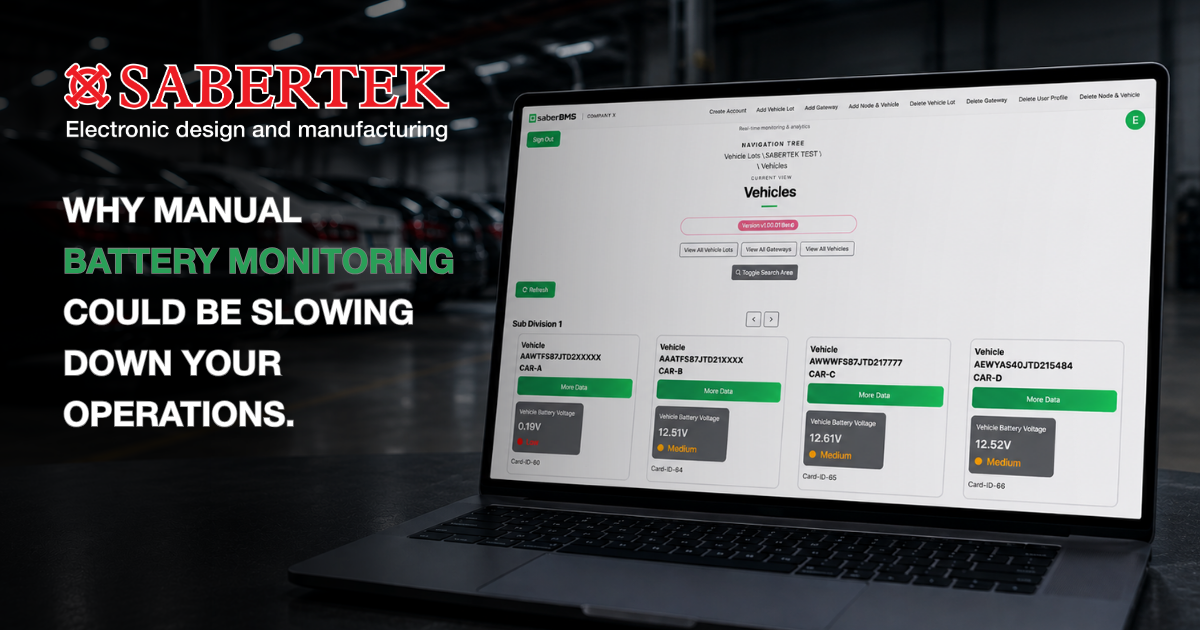
SaberBMS was designed to provide a smarter alternative.
The system automatically captures vehicle battery voltage at configurable intervals, removing the need to rely solely on manual inspections and data capture.
Battery information is sent via email, allowing users to view battery voltages and historical information from one dashboard.
Low-voltage alerts can also help flag batteries requiring attention.
The result is greater visibility and the opportunity to identify potential battery problems earlier.
From Manual Checks to Better Decisions
Automation isn’t simply about replacing a manual task.
It’s about giving maintenance teams better information.
Historical battery data allows voltage trends to be monitored over time, supporting more proactive maintenance planning and helping teams make informed decisions about their fleet.
Instead of asking:
“When was this battery last checked?”
The better question becomes:
“What is the data telling us?”
A Smarter Approach to Fleet Battery Monitoring
As operations become increasingly connected and data-driven, routine maintenance processes should evolve with them.
SaberBMS combines automated monitoring, centralised visibility, historical data and early detection to help businesses move away from labour-intensive battery inspections and towards a more proactive approach to fleet maintenance.
Automated. Wireless. Intelligent.
That’s SaberBMS.