
Today’s electronics are expected to perform flawlessly in environments where failure simply isn’t an option. Whether a product is used in industrial automation, medical equipment, agriculture, automotive applications, or security systems, reliability begins long before the product reaches the customer. It starts with consistent manufacturing processes and rigorous testing.
At Sabertek, quality isn’t something that gets inspected into a product at the end of production. It’s built into every stage of the journey, from engineering and prototyping to manufacturing, testing, and final verification. This commitment to consistency is one of the reasons reliable electronics continue to perform in the field, year after year.
Why Consistency Matters in Electronics Manufacturing
Manufacturing a single circuit board correctly is one achievement. Producing hundreds or thousands of identical, high-quality boards is where true manufacturing expertise is demonstrated.
Every production run must deliver the same level of quality regardless of volume. Even small variations in solder paste application, component placement, temperature profiles, or assembly procedures can affect product performance and long-term reliability.
Consistency relies on controlled processes, documented procedures, calibrated equipment, and experienced manufacturing teams. When these elements work together, manufacturers can minimise variation and ensure every product performs exactly as intended. Industry research consistently shows that high-performing electronics manufacturers rely on standardised quality systems, statistical process control, and multiple inspection methods to reduce defects and improve first-pass yields.
For customers, this means confidence that every product they receive will meet the same high standard as the last.
Testing Is More Than Finding Faults
Many people assume testing is simply about identifying defective products. In reality, testing is about verifying that every product performs exactly as it was designed to.
Effective testing confirms that electrical circuits function correctly, components communicate as expected, and products will operate reliably once installed in the real world.
Modern electronics manufacturing often combines multiple inspection and testing methods, including:
- Automated Optical Inspection (AOI) to detect assembly defects.
- Solder Paste Inspection (SPI) to verify solder quality before component placement.
- In-Circuit Testing (ICT) to confirm electrical integrity.
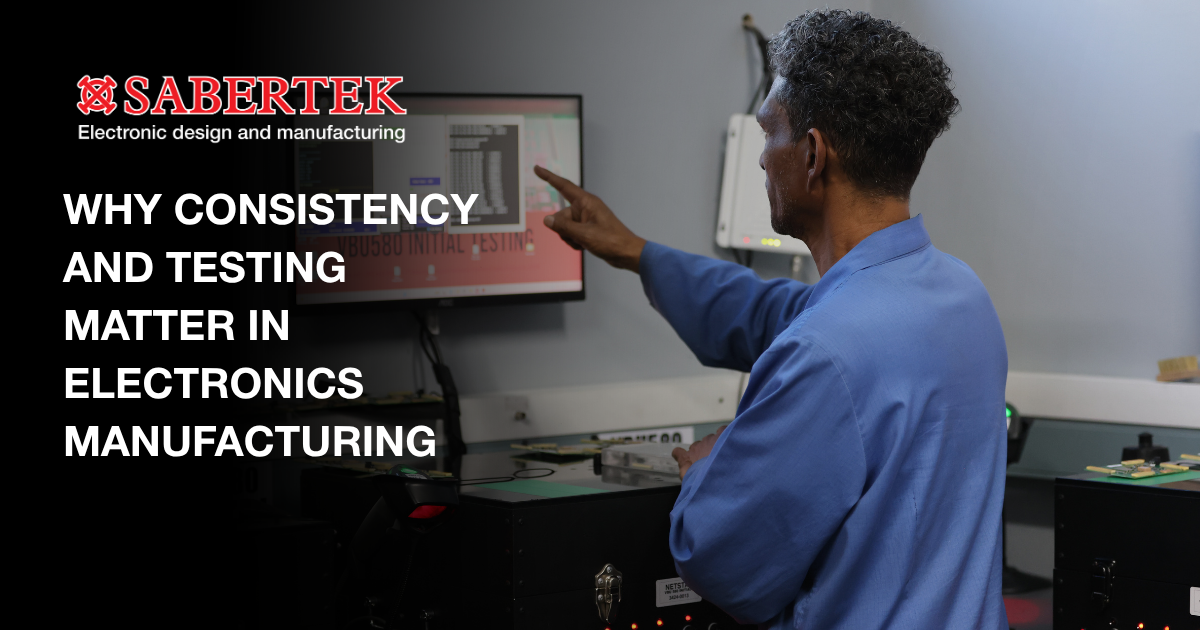
- In-house developed Automated Functional Testing Systems ensure that every finished product performs precisely as designed and meets all functional requirements.
- Final product verification before packaging and shipment.
Each stage serves a different purpose. Together, these methods create multiple quality checkpoints throughout production instead of relying on a single inspection at the end.
Building Quality Into Every Step
The most reliable products aren’t created by adding more inspections. They are created by preventing problems before they occur.
This starts during the engineering phase, where products are designed with manufacturability in mind. Design for Manufacturing (DFM) principles help engineers create products that can be assembled consistently, tested efficiently, and manufactured at scale without compromising quality.
As production begins, controlled manufacturing processes, accurate documentation, automated equipment, and trained operators help ensure repeatable results.
This philosophy aligns closely with Sabertek’s approach. From concept development through prototype testing, industrialisation, manufacturing, and after-sales support, every stage is designed to maintain quality and reduce risk throughout the product lifecycle.
Traceability Makes a Difference
When quality matters, traceability matters just as much.
Being able to identify when a product was manufactured, what components were used, which production batch it belongs to, and what testing it passed provides valuable information throughout the product’s lifecycle.
Complete traceability supports:
- Faster root-cause analysis if issues arise.
- Improved quality assurance.
- Better warranty management.
- Greater customer confidence.
- Continuous process improvement.
At Sabertek, products are recorded and tracked by serial number after final assembly. This provides full traceability throughout the manufacturing process. Each product is supplied with a comprehensive test log that includes all measurements and other relevant testing results. Sabertek maintains detailed records of every manufactured unit in its database for a period of five years.
Quality Is a Long-Term Investment
Testing and quality control require time, expertise, and investment. While it may be tempting to reduce testing to lower manufacturing costs, the long-term cost of product failures is almost always significantly higher.
Unexpected downtime, warranty claims, field repairs, product recalls, and reputational damage can quickly outweigh any short-term savings.
For industries where reliability is critical, consistent manufacturing and comprehensive testing are not optional. They are essential.
A Commitment to Reliable Electronics
At Sabertek, quality is never treated as a final checkpoint. It is integrated into every stage of the manufacturing process through engineering expertise, controlled production, advanced manufacturing technology, comprehensive testing, and continuous improvement.
This commitment allows customers to move from concept to production with confidence, knowing their products are being manufactured to deliver reliable, repeatable performance every time.
Because in electronics manufacturing, consistency isn’t just about producing products.
It’s about building trust.